
How to choose a sleeping bag: everything you need to know… and avoid!
Choosing the right sleeping bag is crucial for safe and comfortable nights outdoors. But to make the right choice and avoid pitfalls, you need a basic understanding of the subject. What factors should you consider? How do you navigate the options when brands use different standards? This article is your compass to guide your choice, based on your needs and budget. Follow the guide!
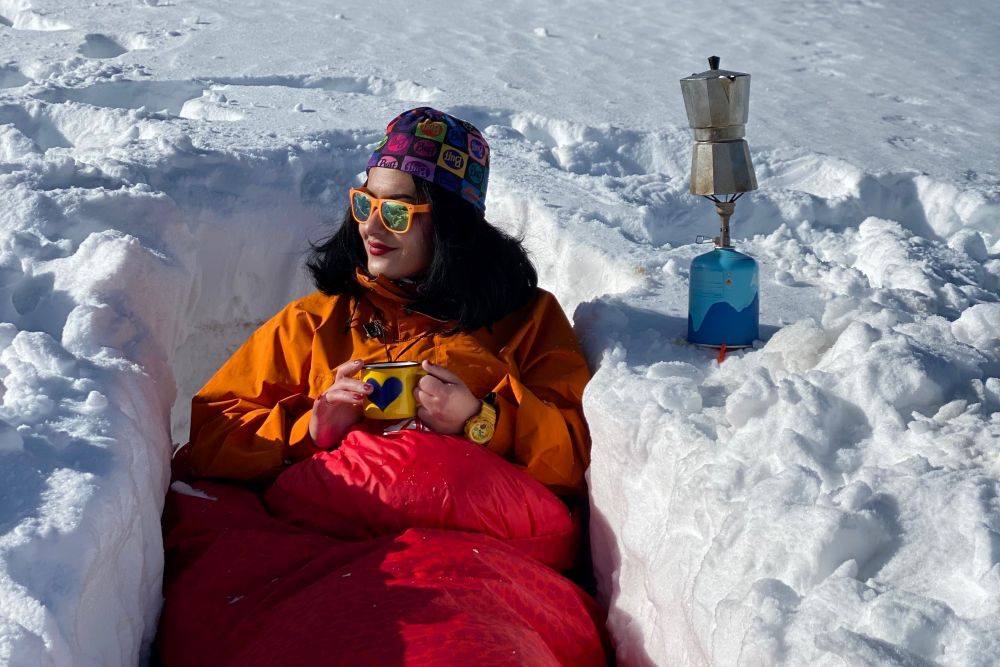
Down vs synthetic sleeping bag: which one should you choose?
Which is better: a down-filled or synthetic sleeping bag? It will depend on both your intended use and your budget. Let’s look at the advantages and disadvantages of each type of filling.
Goose or duck down/feathers
| Advantages | Disadvantages |
|---|---|
| Best weight /volume /heat ratio | More expensive |
| It ages better and retains its heat better over time | Does not withstand humidity, loses all its heat if soaked |
| Ultra-compressibility | Care instructions: less easy to wash |
| More fragile |
Synthetic fibers
| Advantages | Disadvantages |
|---|---|
| Cheaper | Less favorable weight /volume /heat ratio |
| Resistant to moisture, retains heat well even when soaked | It ages less well, loses its heat more quickly over time |
| Care instructions: easier to wash | Less compressible volume |
| More robust |
In my opinion, the deciding factor is the type of trips you take. A synthetic sleeping bag is preferable for humid conditions. This is a no-brainer for sailing at sea or for trips without a tent.
Choosing the right sleeping bag size
The size of your sleeping bag is a parameter that should not be overlooked. Your sleeping bag must be large enough to allow you to close the hood completely over your head. In practical terms, this means you must be able to pull it down all the way to your nose. This will be especially important on nights when you encounter less than ideal weather. Why? Because the nose is a point of entry for cold air, making you more sensitive to it. Conversely, if it’s too large, you’ll lose some of its thermal insulation.
But be careful, don’t follow the manufacturers’ recommendations! They have a bad habit of giving sizes that are larger than they should be. A “regular” size for someone 1.80 m tall, for example… Whereas for someone over 1.75 m, you should go up a size. So, I’m going to give you a simple and foolproof guideline. To estimate the right size for your sleeping bag, add 30 to 35 cm to your height. Are you 1.80 m tall? Your sleeping bag should measure between 210 and 215 cm, quite simply.
Finding the right temperature for your trekking sleeping bag
Comfort vs. comfort limit: pay attention to the temperature rating
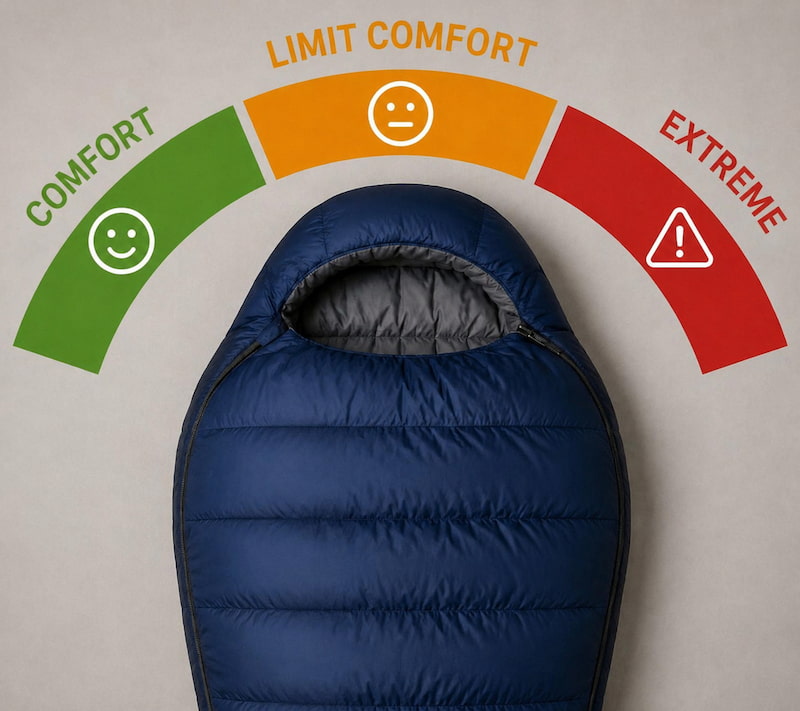
These definitions are crucial:
- Comfort temperature: a woman weighing 60 kg sleeps comfortably.
- Comfort limit: a 70 kg man starts to get cold, and camping is no longer a leisurely stroll…
- Extreme: Hypothermia limit, absolutely avoid!
The temperature you should consider when choosing your sleeping bag is the comfort temperature. However, some brands confuse the issue by highlighting the comfort limit temperature. This temperature can be given in either Celsius or Fahrenheit. So be sure to check which temperature it is and in which unit.
What temperature for your trip?
Here are some guidelines based on your upcoming itineraries:
- Hiking sleeping bag for spring/summer/autumn (excluding high mountains, average altitude above 2000m): Around 0°C comfort. This applies to most situations. In France, this is the case for long-distance hiking trails like the GR5 or GR20, for example. Elsewhere, for most of the world’s major thru-hikes, such as the Pacific Crest Trail (PCT) in the US, a 5°C comfort rating will suffice. For lower mountain trails, like the Camino de Santiago, a 5°C comfort rating will be sufficient.
- Mountain sleeping bag for winter bivouacs: -10 to -20°C comfort rating.
Note that these temperatures should be adjusted according to your personal sensitivity. But also… the brand! Testing protocols and standards vary, and this can lead to significant differences. For an accurate assessment, you will need to compare the fill power (CUIN). We’ll look at that shortly. But first, let’s see what other factors to consider to stay warm while camping.
Key details to consider when choosing a sleeping bag
Here are the details that are important for your selection:
- The shape. The most efficient shape for warmth is the mummy shape.
- The fabric quality. It can be more or less water-repellent or waterproof.
- The zipper length. The shorter the zipper, the more insulation you gain, but the more breathability you lose
Down quality and fill power explained
CUIN, or fill power: what does this rating mean?
The quality of the down is what determines the warmth of a down sleeping bag. Fill power is a measure of the loft of the down. It is measured in CUIN (Cubic Inches). Fill power is one of the best ways to compare down sleeping bags from different brands. The higher the fill power, the less down is needed to fill the sleeping bag, making it lighter.
Here is an example of the weight of a 0°C comfort sleeping bag depending on the quality of its down:
- 500 grams all included for a very high-end bag with over 850 CUIN
- 850 g for a mid-range 750 CUIN down sleeping bag
- 1100 g and above for a low-end 650 CUIN down sleeping bag
But beware of the trap! There are two standards for evaluating down quality:
- The European standard: EN 12130
- The American standard: IDFB
The tricky part is that these two standards are not equivalent. It is estimated that the European standard EN 12130 is 5 to 10% stricter than the American IDFB standard. So be careful if you are comparing two models from two different brands.
Responsible down standard (RDS) certification: animal welfare
Fortunately, there is a standard to guarantee that geese and ducks are not mistreated. This is the RDS standard, and here’s what it guarantees:
- No live plucking
- No force-feeding
- Animals raised in humane conditions
- Complete traceability of the supply chain, from farm to finished product.
How to choose the best sleeping bag for your needs: final tips
Now you know how to choose the right sleeping bag for your needs. Keep in mind that your sleeping bag will last for years. So be careful not to fall into the trap of choosing one based solely on your next trip.
If your expeditions involve significant temperature variations, you might need two sleeping bags. Otherwise, a thermal sleeping bag liner can provide temporary protection in case of harsher temperatures. This is the solution I’ve used for several years, along with a warm sleeping bag liner. This also has the advantage of keeping your sleeping bag much less dirty. When backpacking, sleeping in dirty clothes is a common occurrence. Finally, you can use it alone in very hot weather. The same applies if you’re sleeping in a mountain hut, where it’s often mandatory.
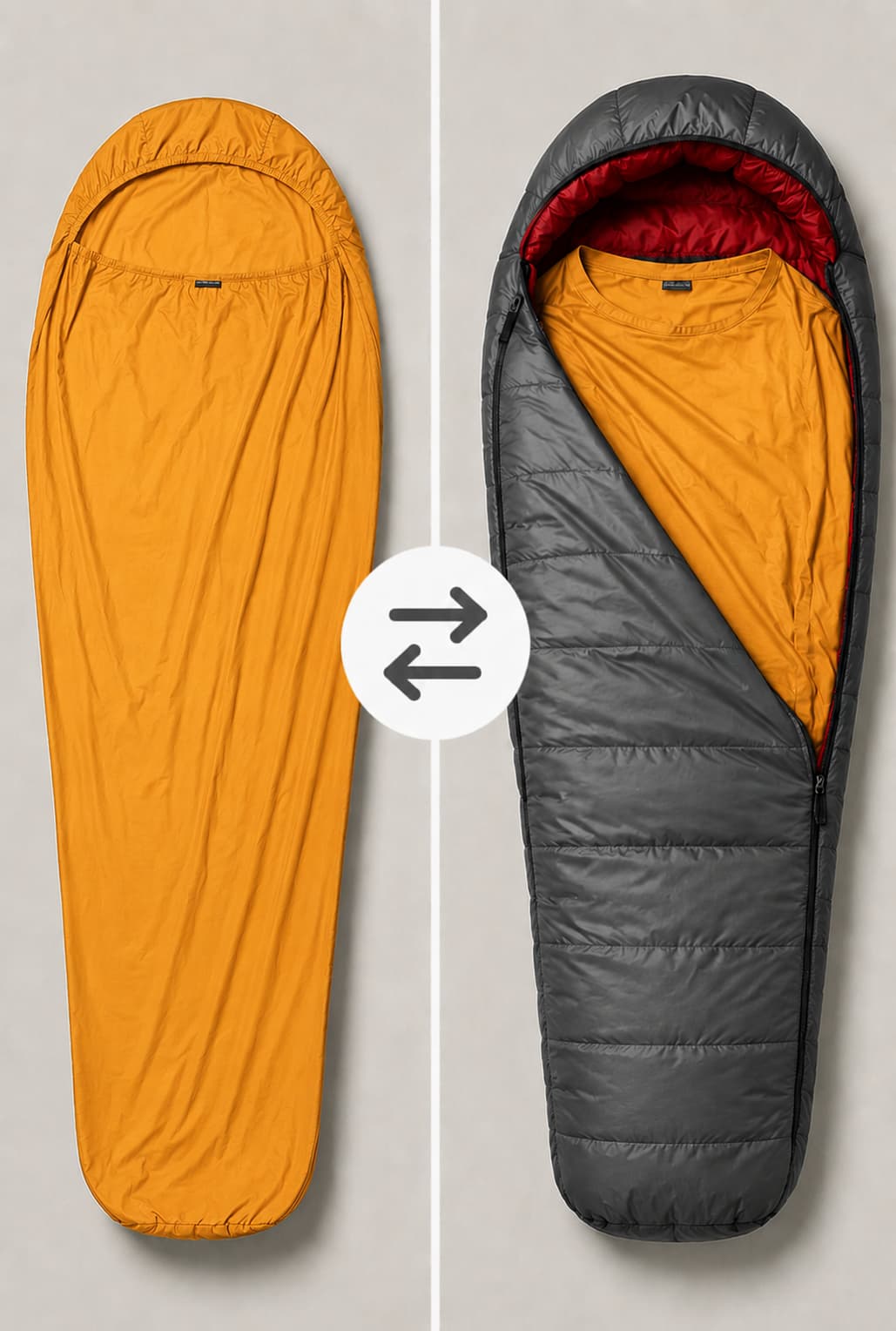
One last tip from my experience: use an ultralight bivy bag in addition to your sleeping bag and sleeping bag liner. This is an emergency bivouac bag that reflects body heat, much like a survival blanket. When used with a thermal sleeping bag liner, it can increase the comfort temperature by more than 10°C. Last but not least, it’s waterproof, windproof, and slightly breathable, allowing you to enjoy the pleasures of bivouacking under the stars.
These two small items make my camping gear much more versatile. Since they’re so lightweight, I always pack them in my backpack or panniers before setting out. Check out my unbiased review of the Escape Lite Bivvy SOL, after years of trekking and bikepacking use.