
SOL Escape Lite Bivvy: my independent review after 4 years of testing
Tested, tried, and true… I’m definitely a fan! This SOL Escape Lite Bivvy review is the result of four years of field testing, in real outdoor conditions. This emergency bivouac bag, as light as it is compact, is a real game changer. Used on hikes and bike trips, it’s helped me tackle a wide range of situations. And let’s be honest, it’s less about survival and more about comfort!

My Escape Lite Bivvy review in 30 seconds
| What I like: | What I don’t like: |
|---|---|
| Impressive warmth boost | Some condensation |
| Ultra-lightweight (155 g) | No hood |
| Reusable and easy to clean | Limited waterproofing data |
| Quiet | |
| Effective moisture protection |
My ratings :
- Warmth: 10/10
- Weight: 10/10
- Versatility: 10/10
- Breathability: 7/10
- Waterproofing: 6/10
- Weight-to-performance ratio: 10/10
Verdict : 4,4/5
An emergency bivy bag… What’s the point for camping?
An emergency bivy bag, as the name suggests, is an emergency (and therefore survival) accessory. But while that’s its official function, it’s far from the only one. For me, it even comes after all the others, like the icing on the cake. Here’s how I’ve perceived the benefits of the SOL Escape Lite Bivvy over the years, ranked in order of importance:
1. Expanded comfort range of your sleep system
This is the benefit that has the greatest impact in my view. An emergency bivy sack will allow you to increase the thermal insulation of your sleeping bag. This is especially true if you add a warm sleeping bag liner, such as fleece or Thermolite. Of course, all of this applies if you use a mattress that offers good insulation (R-Value), whether it’s inflatable or foam pad.
2. Protection against wind and moisture
This is a major advantage. It will keep you dry in case of excessive moisture while sleeping in a tent or under the stars.
3. The use of an emergency bivouac sack (and not just the name)
A bivy can serve as an emergency shelter. For example, if you’re injured and unable to set up a tent. Or if you don’t have camping gear, you can slip it into your backpack for day hikes.
Escape Lite Bivvy: quick overview
Designed by the brand SOL (Survive Outdoor Longer), it offers the following features:
- Weight: 155 g
- Material: olefin fabric with a metallic coating
- Thermal reflectivity: 70%
- Windproof
- Waterproof
- Breathable
- Reusable (unlike a traditional survival blanket).
On paper, this is an ultra-lightweight product that looks very promising. Now let’s see how it actually performs in the field, under varied and long-term use.
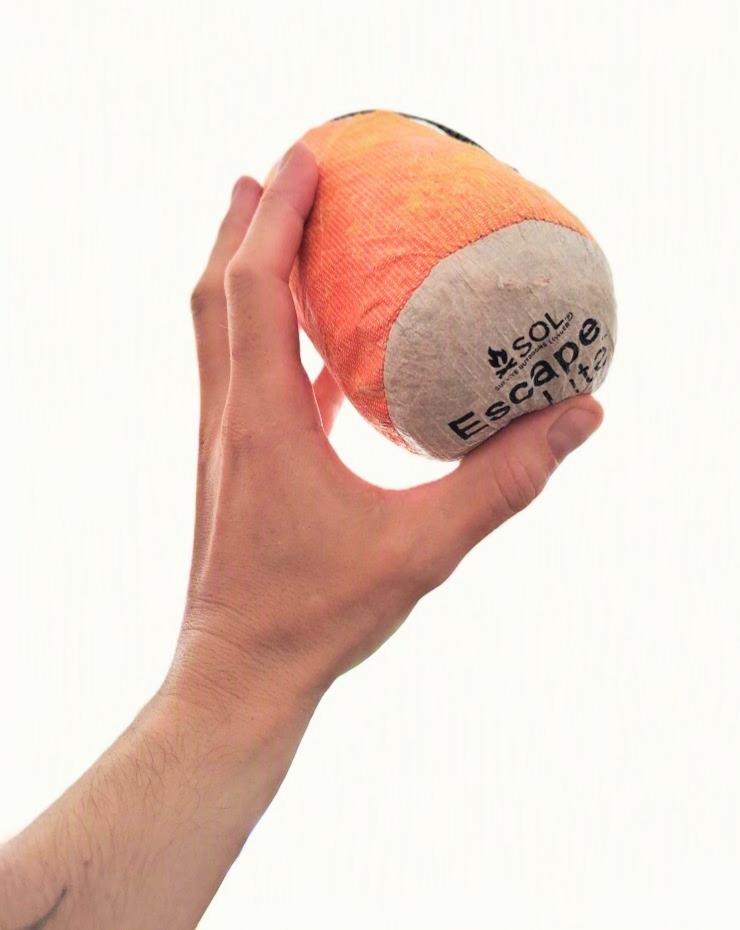
Field-tested SOL Escape Lite Bivvy review
A bivy that noticeably increases warmth
In the field, the temperature gain provided by the Escape Lite Bivvy is very noticeable. When paired with a warm sleeping bag liner, I can confirm a comfort temperature gain of at least +10°C. This allows you to use a lighter down sleeping bag or gain greater versatility.
A key component of my sleeping system, offering great versatility
I never use my emergency bivy bag on its own. Here’s the sleeping gear I’ve used it with over these four years of testing:
- A 0°C down sleeping bag (entry-level/mid-range)
- A thermal sleeping bag liner (Sea to Summit)
- An insulated air mattress
The result is a system capable of covering a huge range:
- From -10°C (or even lower)
- Up to warm nights
An overbag to handle adverse conditions
Used as a third layer (over the down sleeping bag), a bivy cover protects you from the elements. Excessive, ever-present moisture, or a tent that leaks, are common occurrences when bivouacking. I bet you haven’t always stayed dry during your camping trips, have you? I’ve been completely soaked before… Like during a big storm when my bivouac area turned into a giant river. With your sleeping bag protected inside the bivy, you’ll avoid a dangerous situation. A soaked down sleeping bag offers no protection at all. If temperatures drop below freezing, you can’t fall asleep or you risk hypothermia. Yes, nothing less!
Sleeping bag protection for cowboy camping

A water-resistant bivy liner lets you sleep under the stars. When the weather is good and the setting is inviting, it offers a unique pleasure. Sleeping in a tent, even without the flysheet, cuts you off from the outside world. And while this creates a protective cocoon, it also limits your experience of nature. Finally, sleeping without a shelter or bivy is possible in good weather, that’s true. But then you can be sure your down will be soaked with dew in the morning.
Comfort and ease of use
Unlike a survival blanket, the SOL Escape Lite Bivvy isn’t noisy. Its wide, rectangular, non-sarcophagus shape offers enough volume to hold the sleeping bag. The material is soft and feels quite pleasant to the touch. Note, however, that I’ve always used it with clothes on, never directly against the skin.
Durability and ease of care
A major plus: it’s reusable, durable, and easy to maintain. I’ve machine-washed mine several times (on the delicate cycle without spin). And after 4 years, it’s still in good condition.
Limitations of the product and the test
Limited breathability
Yes, the synthetic fibers used are breathable… But there’s always a bit of condensation. Nevertheless, this is a physical trade-off, not a flaw. The more windproof a material is, the less breathable it is.
Limitations of the test
I did not use my emergency bivy sack on its own, nor in the rain. In addition to its water-repellent properties, which I did not test under these conditions, note the lack of a hood. Furthermore, the brand does not provide any numerical values for waterproofing, such as mm Schmerber (water column). I therefore doubt its ability to protect you during a heavy downpour.
SOL Escape Lite Bivvy vs other bivy sacks: comparison chart
To complete this SOL Escape Lite Bivvy review, I’ve compared it with its main competitors.
| Model | Weight | Warmth | Key Features |
|---|---|---|---|
| SOL Escape Lite Bivvy | 155 g | +++ | Reusable, breathable |
| SOL Escape Bivvy | 240 g | ++++ | Reusable, breathable |
| SOL Emergency Bivvy | 108 g | +++ | Limited reusability |
| Sea to Summit Emergency Bivy | 108 g | ++ | Single-use |
| Outdoor Research Helium Bivy | 450 g | ++ | Waterproof bivy shelter |
| Blizzard Survival Bag | 385 g | +++++ | Highly insulated |
| Therm-a-Rest Escape Bivy | 227 g | ++++ | Good warmth/ breathability balance |
| Rab Storm Bivi | 320 g | ++ | Very durable |
| Alpkit Hunka XL Bivvy Bag | 400 g | ++ | Excellent value for money |
| Standard Emergency Blanket | 60 g | ++ | Very fragile |
| Reusable Emergency Blanket | 170 g | ++ | Limited versatility |
Sources for the table: Manufacturer data, user feedback from the outdoors (trekking/bikepacking forums), and field tests combined with my own experience.
In conclusion, I highly recommend the Escape Lite Bivvy if you’re looking to make your sleep system more versatile. If you’re reading this SOL Escape Lite Bivvy review to find out whether it’s worth buying, my answer is yes. That said, I wouldn’t consider it a fully waterproof bivy capable of replacing a tent in sustained rain. After four years of use, my opinion of the Escape Lite Bivvy hasn’t changed. It has become an essential part of my camping gear. At just 155 grams, it significantly extends the performance and versatility of my sleeping bag. And if you’d like to learn how to choose a sleeping bag, I’ve written this guide for you!